




Home » Transportation Management (TMS)
Kaleris Transportation Management Software helps transportation teams manage routing, dispatch, fleet operations, carrier relationships, and transportation execution from a single platform. Designed for private fleets, common carriers, distributors, manufacturers, retailers, and logistics providers, Kaleris helps organizations improve efficiency, reduce manual coordination, and maintain visibility across daily transportation operations.
Kaleris helps transportation teams reduce costs, automate manual workflows, improve fleet utilization, and gain greater visibility into daily transportation execution.
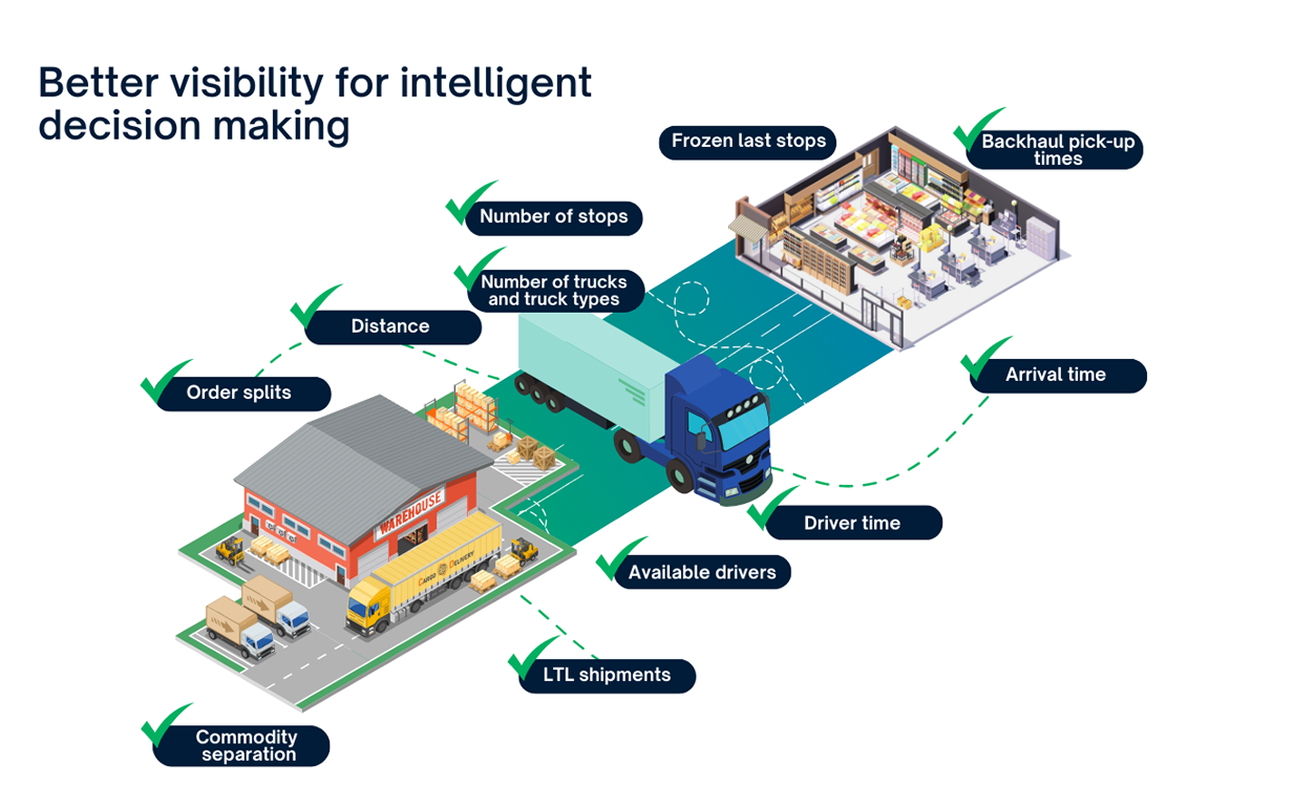
Designed for high-complexity, multi-stop retail networks, our AI-driven routing engine replaces manual scheduling. It simultaneously models delivery windows, weight constraints, and Hours-of-Service (HOS) rules to optimize stop sequences and maximize fleet capacity.
Tailored for private fleet operations, this solution automates driver activity tracking, reporting, and payroll workflows. By integrating native ELD telematics, the system feeds live status data directly to dispatch, eliminating manual entry to maintain compliance and accuracy.
Streamline external logistics by automating the load tendering process. The platform broadcasts loads directly to verified carrier networks, enabling centralized management of rates and route selection through a single, connected console.
Transform data into a command center for proactive decision-making. Unify load tracking across private fleets and common carriers for end-to-end visibility into status, ETAs, and freight documentation. Manage transit exceptions proactively to ensure consistent service levels.
Based on customer-reported results
Leverage route optimization and carrier sourcing tools to lower freight costs and improve transportation efficiency.
Optimize routes, reduce miles driven, and maximize fleet utilization across transportation operations.
Replace manual payroll and activity tracking processes with automated driver data collection and validation.
Replace disconnected workflows and manual data entry with automated transportation processes.
Provide operations teams with real-time visibility into inbound deliveries, helping improve labor planning and operational coordination.
Connect transportation workflows with ERP, warehouse, and operational systems to eliminate duplicate data entry, reduce errors, and ensure teams are working from the same information.
Give your transportation team their time back without giving up control.
Transportation teams shouldn't spend their day manually adjusting routes, coordinating drivers, or tracking down shipment updates. Kaleris automates key transportation workflows so teams can move faster, reduce manual effort, and stay focused on execution.
Instant capture and processing of gate-in and gate-out movements that automatically update shipment status, yard inventory, and carrier workflows.
Real-time visibility into trailer, container, and equipment status as assets move through gates, yards, and transit networks.
Continuous two-way data exchange between enterprise systems that ensures updates in ERP, WMS, and TMS are reflected instantly across all connected platforms.
Rule-based generation of shipments from orders, appointments, and planned moves, eliminating manual entry and accelerating dispatch readiness.
Kaleris replaces manual phone calls and spreadsheet-driven routing guides with cascading, automated tender workflows that broadcast directly to verified carrier networks. By moving spot procurement into algorithmic reverse auctions, shippers secure optimal lane coverage under tight market constraints while saving an estimated $650,000 to $700,000 annually in manual administrative costs.
Kaleris eliminates costly empty return miles by automatically matching outbound store deliveries with inbound supplier pickups and facility returns. Continuous route optimization consolidates fragmented freight into fuller truckloads and identifies optimal supplier pickup opportunities, transforming return legs into productive fleet capacity. This closed-loop approach helped a national retailer improve trailer utilization by 10.86%, maximizing the value of private fleet assets.
Kaleris replaces static dispatch schedules with event-driven route optimization that automatically responds to traffic delays, warehouse disruptions, and impending Hours-of-Service (HOS) violations. By dynamically resequencing routes to preserve delivery commitments, fleets improve operational efficiency while reducing unnecessary mileage. This predictive approach helped large retail networks achieve a 10% reduction in total miles driven, potentially saving millions of dollars annually.
When connected to Kaleris Execution Visibility Platform (EVP), logistics teams get the whole picture. Nothing in supply chain occurs in isolation. With access to transportation, yard, dock, and distribution data, organizations can tailor their workflows to create goals that scale, enabling faster operational response, better coordination, and consistent execution.
Transportation execution as a coordination challenge, not just a routing or dispatching function. Performance depends on what happens across every element of your operation, including yards, terminals, docks, fleets, and distribution operations. Kaleris TMS helps businesses make transportation decisions using live operational conditions across environments.
As private fleet operations grow, transportation teams often rely on emails, spreadsheets, phone calls, and disconnected systems to coordinate dispatching, dock schedules, delivery changes, and fleet activity. These manual workflows become harder to scale as operational complexity increases.
Kaleris TMS helps logistics teams reduce manual coordination by connecting dispatching, routing, operational visibility, and appointment workflows within a shared execution environment. Transportation decisions can be made using live operational conditions across fleets, facilities, and delivery operations helping teams respond faster and keep freight moving predictably across the network.
Detention is often caused by disconnected transportation and facility operations. Delays across yards, docks, gates, and warehouses can create unnecessary dwell time that impacts drivers, schedules, and overall network efficiency.
Kaleris helps transportation teams reduce detention through better coordination between transportation execution and operational workflows. Shared visibility across appointments, yard activity, dock schedules, and fleet movement helps teams respond earlier to disruptions and improve freight flow across the network.
Intermodal transportation requires coordination across carriers, facilities, transportation modes, schedules, and operational workflows. Disconnected systems can make it difficult to maintain execution visibility and respond consistently to disruptions across the network.
Kaleris TMS supports intermodal operations through shared operational visibility across transportation, yard, terminal, and distribution workflows helping logistics teams reduce manual coordination, improve responsiveness, and maintain more consistent freight execution.
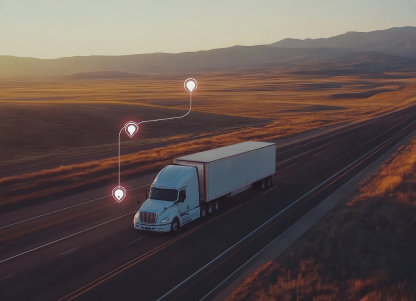
Reduce empty miles, improve route planning, and keep deliveries on schedule with real-time fleet visibility across drivers, assets, and shipments.
Manage dispatch, carrier coordination, and shipment tracking from a centralized transportation workflow designed for high-volume freight operations.
Improve load planning, terminal coordination, and shipment visibility across both LTL and full truckload operations while reducing manual scheduling work.
Coordinate rail movements, yard activity, and intermodal freight flows with real-time visibility into equipment, containers, and transportation status.
Kaleris solutions bring together transportation management, yard operations, rail logistics, and execution visibility to support more coordinated supply chain operations.
Drive operational gains through unified, real-time data across your entire intermodal supply chain.
Create and execute the best yard and transportation management plan.
Kaleris ColdLink integrates yard and transportation operations to deliver continuous chain of custody and regulatory compliance.
Kaleris provides both transportation and operational execution solutions. Kaleris Road TMS helps organizations manage routing, dispatch, carrier coordination, fleet operations, and transportation execution, while other Kaleris solutions support yard and terminal operations.
Kaleris can serve as a standalone transportation management system or integrate with existing transportation and supply chain technologies, depending on operational requirements.
Yes. Kaleris is designed to integrate with ERP, warehouse, fleet, and operational systems to reduce manual processes, improve data accuracy, and support connected transportation workflows.
Justifying supply chain execution technology to finance requires presenting clear, multi-dimensional cost reductions that span both road transit and physical terminal boundaries. The Kaleris platform achieves this by combining algorithmic route optimization with live asset tracking to drop empty miles, eliminate administrative labor waste, and minimize asset dwell bottlenecks.
When building your financial business case, enterprise operations typically capture definitive ROI across three major pillars:
True logistics optimization does not happen in a vacuum. By demonstrating to financial leadership that Kaleris synchronizes the road, the driver, and the terminal yard under a single platform narrative, you present a business case focused on total supply chain resilience rather than isolated point-product additions.
Multi-site enterprises should evaluate yard management platforms based on their ability to centralize supply chain execution data within a single multi-tenant cloud instance while enforcing localized facility workflows. The Kaleris platform provides a standardized cloud architecture that synchronizes gate operations, switch instructions, and dock schedules across national network locations.
When measuring a platform’s enterprise scalability, operations teams must audit four critical capabilities:
Kaleris Road TMS supports private fleets, common carriers, distributors, retailers, manufacturers, and logistics providers that manage their own transportation operations or carrier networks.
Many transportation management systems focus primarily on planning and dispatch. Kaleris combines transportation management with broader operational execution capabilities, helping organizations connect transportation workflows with the systems that support freight movement.
Kaleris helps automate route planning, dispatch workflows, carrier coordination, driver payroll processes, reporting, and transportation visibility activities to reduce manual effort and improve operational efficiency.
Shippers can effectively test a provider’s multi-stop optimization algorithm by running an isolated pilot using historical lane data to benchmark the system’s ability to consolidate orders under real-world constraints. The Kaleris TMS Outbound Routing Wizard utilizes advanced simulated annealing and genetic algorithms to build, optimize, and test multi-stop routes against variables like hours of service (HOS), weight, volume, and last-stop delivery windows.
To validate algorithm accuracy during a technology evaluation, follow this structured data testing framework:
Guaranteeing strict Food Safety Modernization Act (FSMA) compliance requires cold chain execution software that connects en-route reefer telematics with immediate gate arrival logs. The Kaleris ColdLink framework automates this process by integrating real-time yard, transportation, and IoT temperature data into a single continuous feedback loop.
To deliver an audit-ready chain of custody, the platform automates record-keeping across three critical phases of transit: