
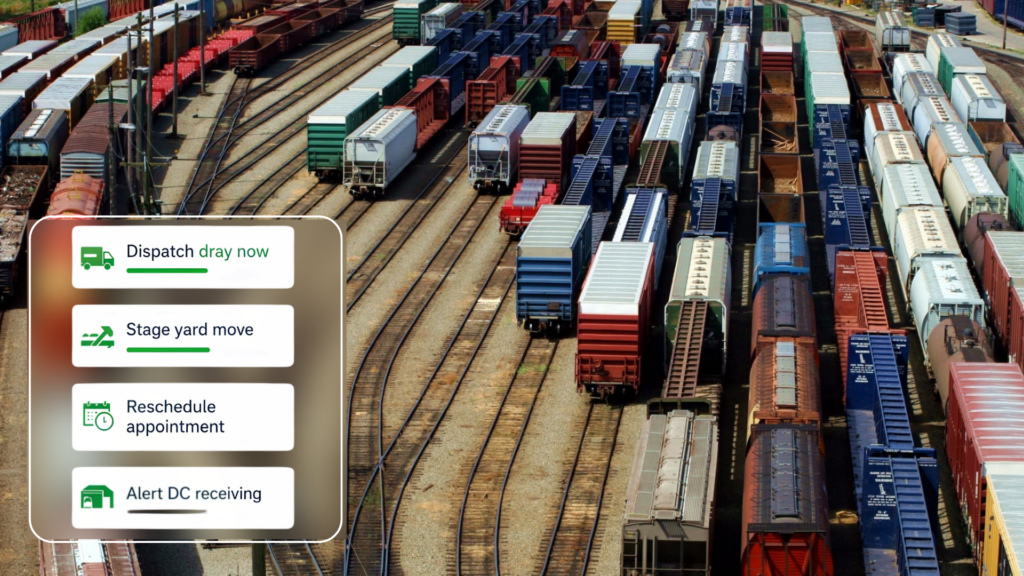
In today’s intermodal operations, speed and precision aren’t just advantages—they’re requirements. But for many organizations, one critical gap continues to slow everything down: disconnected systems between rail transportation and yard management.
A Rail TMS manages rail shipment planning, execution, and event visibility across intermodal transportation networks. A Yard Management System (YMS) coordinates container movement, equipment allocation, and yard execution activities in real time.
When rail transportation and yard systems don’t communicate, the impact shows up everywhere—manual processes, delayed decisions, and unnecessary costs.
The real issue? A lack of visibility.
Common Problems Caused by Disconnected Rail and Yard Systems
Rail and yard systems play critical roles in intermodal logistics operations. But when transportation data and yard execution workflows operate separately, organizations face limited container visibility, manual processes, delayed dispatch decisions, and rising demurrage costs.
On paper, operations may appear functional. But behind the scenes, inefficiencies add up quickly:
- Teams manually re-enter container and waybill data across systems
- Dispatch decisions are made without real-time updates
- Demurrage calculations are inconsistent—and often disputed
- Container visibility disappears between terminal and yard
These aren’t isolated issues—they’re symptoms of fragmented data flow. Over time, the operational impact extends far beyond lost time, driving higher labor costs, avoidable delays, and reduced yard efficiency.
Why Rail TMS and Yard Management Visibility Matters in Intermodal Operations
Rail Transportation Management Systems (Rail TMS) and Yard Management Systems (YMS) are critical to Maintaining visibility across intermodal operations requires synchronized coordination between transportation systems, terminal events, and yard execution workflows. When these systems operate separately, organizations lose the real-time awareness needed to coordinate container movement efficiently.
Without integrated rail and yard visibility, operations teams often rely on delayed updates, manual communication, and disconnected workflows to manage dispatch decisions, equipment allocation, and container status. By the time a container reaches the yard, teams may already be reacting to congestion, dwell risk, or staffing gaps instead of proactively optimizing operations.
This lack of end-to-end container visibility creates operational blind spots across the intermodal network, leading to:
- Increased container dwell time
- Higher demurrage and detention costs
- Slower dispatch and gate processing
- Reduced yard throughput
- Manual coordination between rail and yard teams
- Delayed response to exceptions and disruptions
Modern intermodal operations require more than shipment tracking alone. They require synchronized visibility between Rail TMS platforms, terminal events, and yard operations to support faster operational decisions and more efficient container flow from rail terminal to yard.
Benefits of Integrating Rail TMS and Yard Management Systems
The shift happens when rail transportation and yard workflows are integrated into a unified intermodal operations environment. Instead of relying on manual handoffs, data flows automatically from rail to yard—creating a continuous, real-time operational picture.
Here’s what that looks like in practice:
1. Automated Data Flow at the Gate
Container numbers, waybill details, and commodity data are pre-populated before arrival. Gate teams move from data entry to simple verification—saving time and reducing errors.
2. Real-Time Event Visibility
In-transit and de-ramp notifications give teams early awareness of incoming containers, enabling faster and more strategic dispatch decisions.
3. Accurate, Defensible Demurrage Tracking
With terminal out-gate events feeding directly into the yard system, dwell time is calculated from a single source of truth—eliminating disputes and overcharges.
4. Continuous Dwell Monitoring
Operations teams can track how long containers remain in the yard and take action before thresholds are exceeded.
What a Connected Rail TMS and YMS Environment improves
When rail and yard systems operate as one, the benefits go beyond efficiency:
- End-to-end container visibility from terminal to yard
- Faster dispatch decisions supported by real-time operational updates
- Reduced manual labor across gate and operations teams
- Proactive exception management through alerts and reporting
- Improved yard throughput through better operational coordination
- More accurate dwell and demurrage tracking across the intermodal network
Integrated Rail TMS and YMS environments improve container visibility, reduce manual processes, and support faster intermodal decision-making.
A Real-World Benchmark
One global automotive manufacturer improved intermodal visibility by integrating its Rail Transportation One global automotive manufacturer improved intermodal visibility by integrating its Rail TMS with its Yard Management System (YMS).
By connecting inbound rail events, intermodal ramp activity, container status updates, yard operations, and demurrage tracking into a unified workflow, the organization gained real-time visibility across its transportation and yard network.
The integrated Rail TMS and YMS environment enabled:
- Faster container dispatch decisions
- Improved container dwell tracking
- Reduced manual data entry across rail and yard teams
- More accurate demurrage calculations
- Better coordination between terminal and yard operations
This type of connected intermodal operations model helps organizations improve operational consistency, increase yard throughput, and reduce delays caused by disconnected systems.
The Bottom Line: Integration Pays for Itself
Many teams hesitate to adopt new systems due to cost or complexity. But the reality is, the cost of doing Many organizations hesitate to adopt new systems due to concerns around cost or implementation complexity. But in many intermodal environments, the cost of disconnected operations is significantly higher.
Organizations that integrate Rail TMS and YMS platforms commonly improve:
- Demurrage and detention cost management
- Dispatch coordination and operational responsiveness
- Container visibility across terminal and yard operations
- Manual data entry and administrative workload
- Yard throughput and dwell time management
In many cases, the operational efficiency gains alone offset the investment within the first year.
The Future of Intermodal Operations Is Connected
As intermodal logistics networks become more complex, organizations need real-time coordination between rail transportation systems, terminal operations, and yard execution workflows.
Disconnected Rail TMS and Yard Management System (YMS) environments create visibility gaps that slow dispatch decisions, increase container dwell time, and limit operational responsiveness.
Integrated Rail TMS and YMS platforms help organizations improve container tracking, optimize yard operations, reduce demurrage exposure, and respond more quickly to changing intermodal conditions.
For modern intermodal operations, connected rail and yard visibility is no longer optional. It is becoming a foundational requirement for improving operational efficiency, throughput, and supply chain coordination across the network.