
The “Bolt-On” Limitation: Why the Yard Isn’t Just Another Aisle
Many organizations attempt to manage their yard using the “yard module” included in their Warehouse Management System (WMS). While convenient on paper, this approach often falls short because WMS platforms are fundamentally designed to optimize inventory and workflows inside the facility.
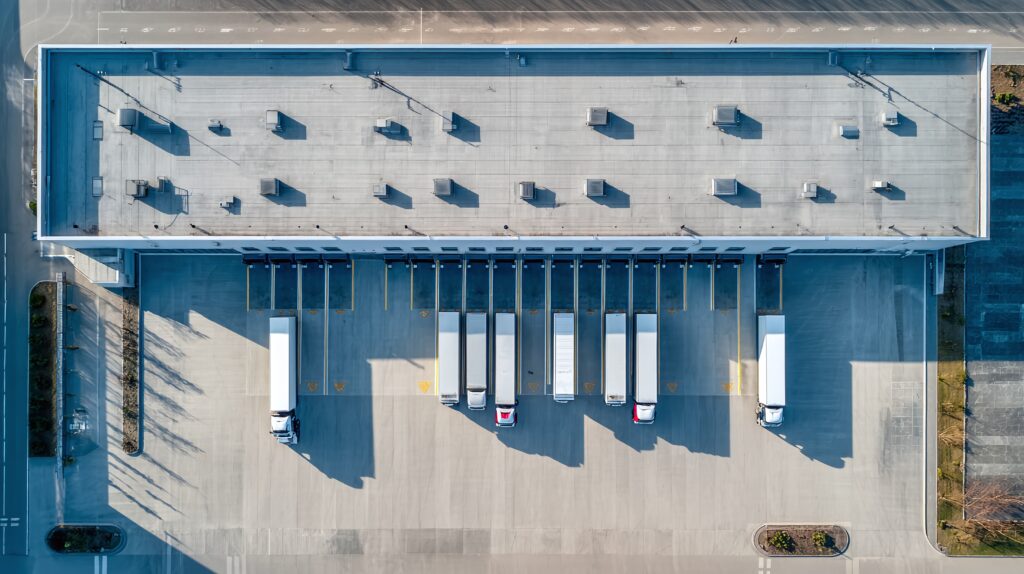
The yard is not just an extension of the warehouse floor; it is a highly dynamic environment where trucks queue, containers dwell, and the handoff between transportation and warehouse operations often breaks down. Most WMS yard add-ons are not built to manage this activity in real time, leading to visibility gaps and manual workarounds as operational complexity increases.
Purpose-Built vs. Add-On: The Execution Gap
A purpose-built Yard Management System (YMS) provides a specialized execution layer that WMS modules typically lack. The difference lies in the ability to move from simple connectivity to active coordination.
- Static vs. Dynamic Data: WMS add-ons often act as passive record-keepers, requiring manual updates. A purpose-built YMS brings real-time structure and control to assets including trailers, containers, and chassis.
- Operational Flow: Efficient execution outside the walls depends on synchronized movement between the gate, yard, and dock. A YMS helps reduce dwell time and improves throughput by coordinating these activities based on live conditions.
- Scalability: As freight volumes and throughput expectations grow, the manual methods often required by WMS modules become impossible to sustain.
The Kaleris Advantage: Orchestration Beyond the Basics
While a standard YMS tracks locations, the Kaleris YMS is designed as a throughput orchestrator that removes the need for human intervention in routine operational decisions. It bridges the gaps between your WMS, TMS, and ERP to ensure data remains consistent and actionable across every stage of execution.
Kaleris goes beyond basic YMS functionality to provide:
- Automated Gate Management: Manage gate check-in and check-out workflows with precision, reducing bottlenecks and ensuring accurate timestamps for every asset.
- Intelligent Dock Scheduling: Go beyond simple “door assignments.” Kaleris provides dock scheduling based on real-time door capability, capacity, and current labor availability.
- High-Fidelity Visibility: Gain a real-time, synchronized view of every asset in the yard, ensuring dispatchers and yard teams are always working from the same “source of truth”.
- Critical Asset Monitoring: Maintain the integrity of the cold chain with the ability to monitor reefer temperatures and fuel levels directly within the platform.
- Intuitive Mobile Workflows: Ensure high adoption from frontline teams with mobile access and guided automation that reduces administrative overhead for gate operators and yard jockeys.
Why the Investment Matters at Scale
As yard operations scale, the cost of disconnected execution becomes harder to ignore. Small inefficiencies – like misplaced trailers or delayed dispatch decisions – quickly compound into significant detention and demurrage costs.
A purpose-built YMS helps manage this complexity by synchronizing workflows across gate, yard, and dock systems. Rather than trying to force a warehouse-centric tool to manage an outdoor environment, Kaleris provides a modern, API-driven architecture that simplifies connectivity while providing the depth of functionality required for complex logistics networks.
FAQS: Choosing a Purpose-Built Solution
While many WMS modules can record a trailer’s location, they often lack the real-time synchronization and automated rules needed to optimize movement. A purpose-built YMS coordinates these movements dynamically as conditions change.
Modern platforms like Kaleris use standardized integration frameworks and API-driven architectures to integrate seamlessly with existing WMS, TMS, and ERP environments.
The value is found in reduced dwell times, lower detention costs, improved labor productivity, and better equipment utilization—benefits that are difficult to achieve with the manual workarounds required by basic yard modules.