
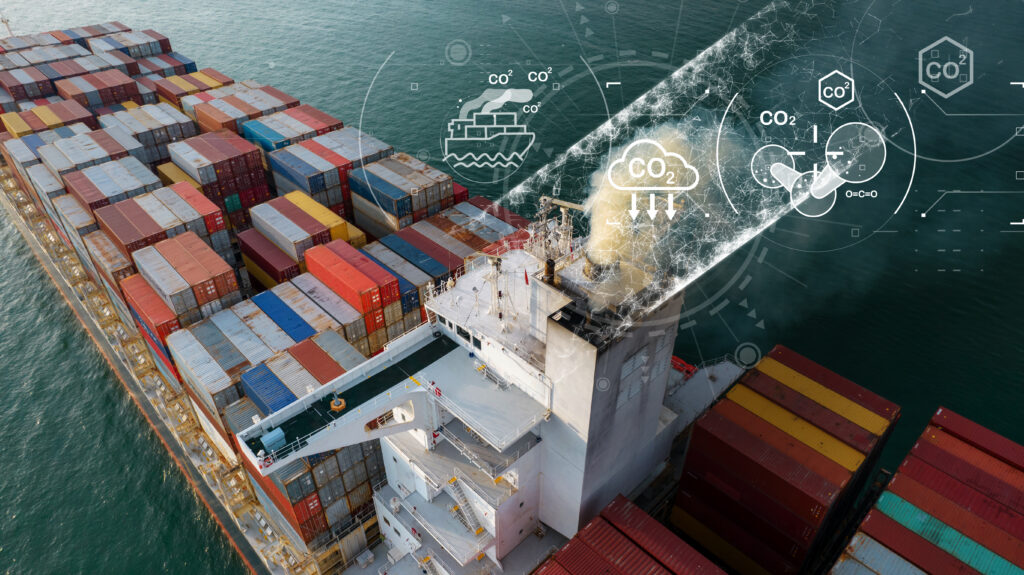
Most operators hear “emission compliance” and imagine reporting deadlines, fuel factors, and the familiar annual scramble to get submissions out the door. But something quieter is happening in the background, and if you run ships day-to-day, it matters more than any single new rule.
Recent IMO technical discussions are increasingly focused not just on what fuel a ship burns or what equipment is installed, but on how vessels are actually operated and maintained over time — hull condition, low-load engine behavior, hybrid operating profiles, and even lifecycle obligations.
That direction of travel changes the compliance game. Because once regulators begin looking at performance and operating reality, data quality stops being a reporting topic and becomes an operational discipline.
From Static Checklists to Dynamic Performance
For years, emissions compliance in shipping was approached as a reporting exercise-focused on documentation, annual totals, and declared methodologies. That model is quickly giving way to a more operational, data-driven standard. Today, organizations are being asked to go a step beyond reporting by demonstrating how performance is actually achieved.
As a result, the conversation is shifting toward questions rooted in real-world operations. How does hull condition impact fuel efficiency over time? What is the measurable effect of low-load engine operation on emissions? Can voyage data be traced, validated, and explained at a granular level—not just summarized after the fact? These are the types of queries shaping how teams search for, evaluate, and implement solutions, reflecting a broader move toward evidence-based, continuously verifiable emissions performance.
As the industry shifts from compliance by installation to performance driven by operational behavior, expectations are becoming more precise. Focus areas like biofouling, scrubber discharge, Arctic black carbon, and low-load engine operation are now under greater scrutiny. It’s no longer enough to simply capture emissions data, what matters is aligning it into a consistent, trusted view of performance.
In reality, emissions data is inherently fragmented. It’s generated across fuel logs and BDNs, noon reports and voyage timestamps, engine and sensor feeds, AIS-derived distance and track behavior, port call definitions, and multiple third-party systems, each applying its own logic.
Bringing these inputs together into a single, coherent picture is what enables accurate reporting, confident decision-making, and meaningful operational improvement.
Each dataset can be “correct” in isolation, and still produce the wrong story when combined. That’s why high-quality emissions data begins with a decision most operators delay: merge first, calculate second.
What It Takes to Build a Reliable Emissions Dataset
- There needs to be a consistent way to connect data across systems.
This means aligning on core identifiers—vessel IDs, voyage definitions, and a clear hierarchy of timestamps—so that every dataset is referencing the same operational reality. Without this, teams can reach different conclusions while both technically being correct, simply because they are working from different boundaries. - Standardization has to be applied across the fleet, not left to vary by vessel.
Differences in how fuels are labeled, measured, or calculated quickly turn a dataset into a source of debate rather than insight. Creating consistency across units, fuel definitions, and calculation methods ensures that performance can be compared, trusted, and acted on. - Effective quality controls are essential to catch issues early.
Missing voyage segments, duplicate entries, or mismatches between reported and observed behavior can all distort the final picture if left unchecked. Identifying and resolving these issues upstream prevents last-minute surprises and protects the integrity of reporting outcomes. - Emissions data needs to stand up to scrutiny.
As expectations shift toward performance-based compliance, organizations are being asked to explain not just what was emitted, but what happened operationally and how it can be verified. That requires data that aligns with the real-world story of a voyage—clear, traceable, and defensible.
This shift has broader implications. Frameworks like EU ETS introduce direct financial exposure, while FuelEU adds new decision points that depend on confidence in emissions balances. At the same time, MRV expectations continue to evolve toward greater traceability and verification readiness.
When emissions data lacks consistency or reliability, the impact goes beyond reporting. It introduces commercial risk, affects planning decisions, and limits the ability to operate with confidence. As a result, data alignment is no longer a back-office concern—it has become a core part of how fleets manage performance.
Where Bluetracker fits, without changing how you operate
For most fleets, the goal is not to build a perfect digital ecosystem overnight. The goal is simpler:
- Reduce rework
- Stabilize numbers earlier
- Make verification predictable
- Keep an audit trail strong enough that the organization can defend decisions
This is where Bluetracker supports the practical side of execution:
- Bringing multi-source inputs into one place (instead of scattered spreadsheets and inboxes)
- Applying standardization and plausibility checks consistently across the fleet
- Producing reporting outputs that are easier to repeat every month and every year
- Supporting collaboration so questions are resolved early, not at submission time
In other words: less late certainty, fewer last-minute changes, and more confidence in what gets signed off.
The takeaway
Meetings like IMO PPR may not dominate headlines, but they consistently signal where regulation is heading: away from static checklists and toward measurable, verifiable operational performance across the lifecycle. For operators, this raises the bar. Trusted, aligned data is the foundation for compliance, commercial confidence, and day-to-day decision-making at sea.