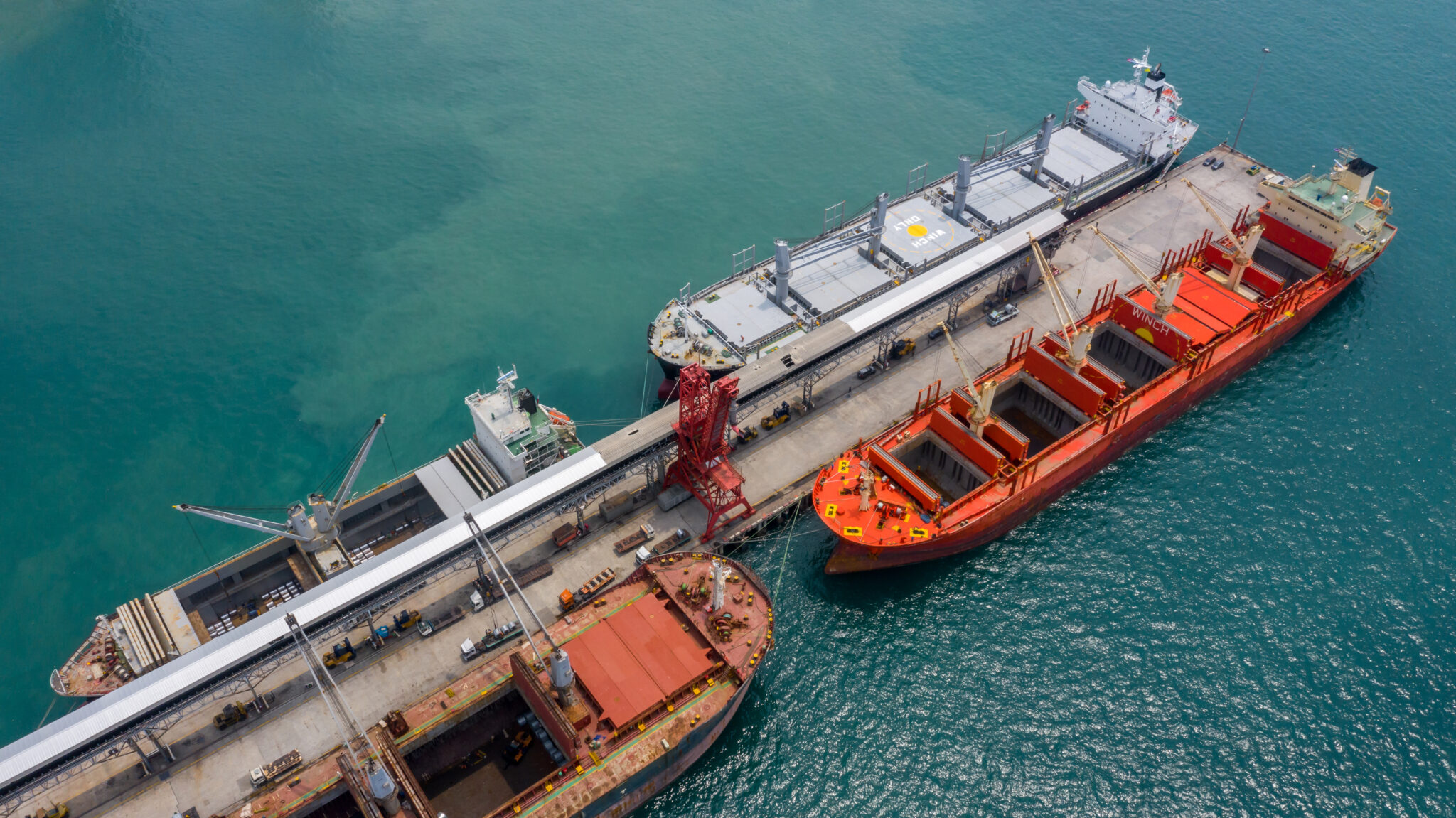
General cargo operations have never been one-size-fits-all.
Break bulk, bulk, project cargo, mixed cargo, RoRo and other specialized cargo types each bring their own handling requirements, workflows and customer expectations. And as those operations become more complex, terminals are being asked to deliver more than throughput.
They are being asked to deliver better execution, greater visibility and measurable value.
That shift is changing the role of the Terminal Operating System (TOS).
During the recent Kaleris webinar, Turning Innovation into Operational Value with Kaleris General Cargo TOS, the conversation explored how technology is evolving alongside the needs of modern general cargo terminals.
The key takeaway?
A TOS can no longer simply tell a terminal what happened. It needs to help operators understand what is happening, what needs to happen next and how those actions translate into business value.

General cargo is more than moving cargo
Containerized cargo often dominates conversations about terminal technology. But general cargo operations encompass a much broader range of cargo and services.
Break bulk, bulk, liquid, project cargo and mixed cargo can require specialized handling, coordination between labor and equipment, contracted services and precise billing tied to what was actually delivered.
As these operations evolve, terminals are increasingly being asked to deliver more than physical cargo movement.
They are also delivering services. Those services can include weighing cargo, applying labels, bagging, cross-docking and other value-added activities.
And those activities matter to the bottom line.
“It's not just moving the cargo, but it's also processing it.”
That creates a direct connection between operational execution and revenue. If a service is performed but isn’t properly recorded, tracked or billed, the terminal risks leaving value on the table.
From operational control to revenue assurance
This is where the TOS becomes foundational.
Modern general cargo operations need technology that can schedule contracted services, provide real-time visibility into execution and connect billing directly to the services delivered.
The goal isn’t simply to automate existing processes.
It’s to create a clearer connection between what the terminal does and the value it captures.
A modern TOS should help terminals:
- Track cargo and movements in real time
- Manage cargo at a more granular level
- Coordinate specialized workflows
- Capture billable operational events
- Connect services to billing
- Support customer-specific requirements
- Reduce manual intervention
- Improve visibility across the operation
As Shane Holdsworth explained during the webinar, value-driven TOS capabilities can help reduce revenue leakage by capturing billable events and managing contracts and invoicing more effectively. That means operational data isn't just information for the operations team. It can become a source of revenue intelligence.
The TOS is becoming a system of information
Historically, a TOS was primarily a system of record. It stored the core information needed to manage terminal activity and served as a single source of truth. Then technology evolved toward systems of engagement, creating more opportunities for users and customers to interact and collaborate with the platform. Today, the expectation is changing again.
“Nowadays, we're looking at TOS to be more of a system of information.”
That evolution is important. A system of information doesn’t simply store data. It brings information together, analyzes it and helps turn it into actionable insight.
For terminal operators, that can mean moving from:
What happened? What is happening?
What should we do next?
That distinction becomes especially important in complex general cargo environments, where decisions often depend on multiple variables at once.
- Cargo type.
- Location.
- Equipment.
- Labor.
- Vessel activity.
- Customer requirements.
- Service commitments.
- Billing requirements.
The more connected those pieces become, the more useful the information becomes.
One platform, many cargo realities
General cargo doesn’t fit neatly into a single operational model.
A terminal may handle bulk cargo in the morning, project cargo in the afternoon and wheeled or containerized cargo alongside it.
Technology therefore needs to support that diversity without creating an entirely different system or workflow for every cargo type.
Kaleris General Cargo TOS is designed around that principle, allowing different cargo types to be managed through a common platform and application environment.
The objective is not simply consolidation.
It’s reducing complexity while maintaining the flexibility that general cargo requires.
That includes supporting different cargo types, customer contracts, workflows and service requirements while maintaining a consistent operational foundation.
Visibility is only valuable when it leads to action
Real-time cargo visibility is now a baseline expectation.
A modern TOS needs to capture cargo movements as they happen and make that information available through tools such as graphical views and mobile applications.
But visibility alone isn’t the finish line.
The real value comes from what operators can do with that information.
When teams can see where cargo is, what work has been completed and what remains outstanding, they can make better decisions around inventory, yard management, labor and equipment.
And when that information is connected to financial workflows, it can also help ensure that services performed are services captured.
Operational visibility and financial visibility don’t have to live in separate worlds.
The future of general cargo is coordinated execution
The evolution of the TOS reflects a broader change happening across terminal operations.
Technology is moving from simply recording activity toward helping coordinate it.
That means connecting:
Cargo → Work → Resources → Services → Billing → Insight
The more effectively those pieces connect, the easier it becomes to reduce operational blind spots, minimize friction and turn complexity into coordinated execution.
And that is ultimately the opportunity for modern General Cargo TOS technology.
Not simply to manage cargo, but to help terminals manage the value created around every move, service and operational decision.
Coming next
In Part 2, we’ll look at where this evolution is headed next, from configurable workflows and flexible integrations to work order optimization and the role of human decision-making in the increasingly intelligent terminal.